
 Image 1 of 4
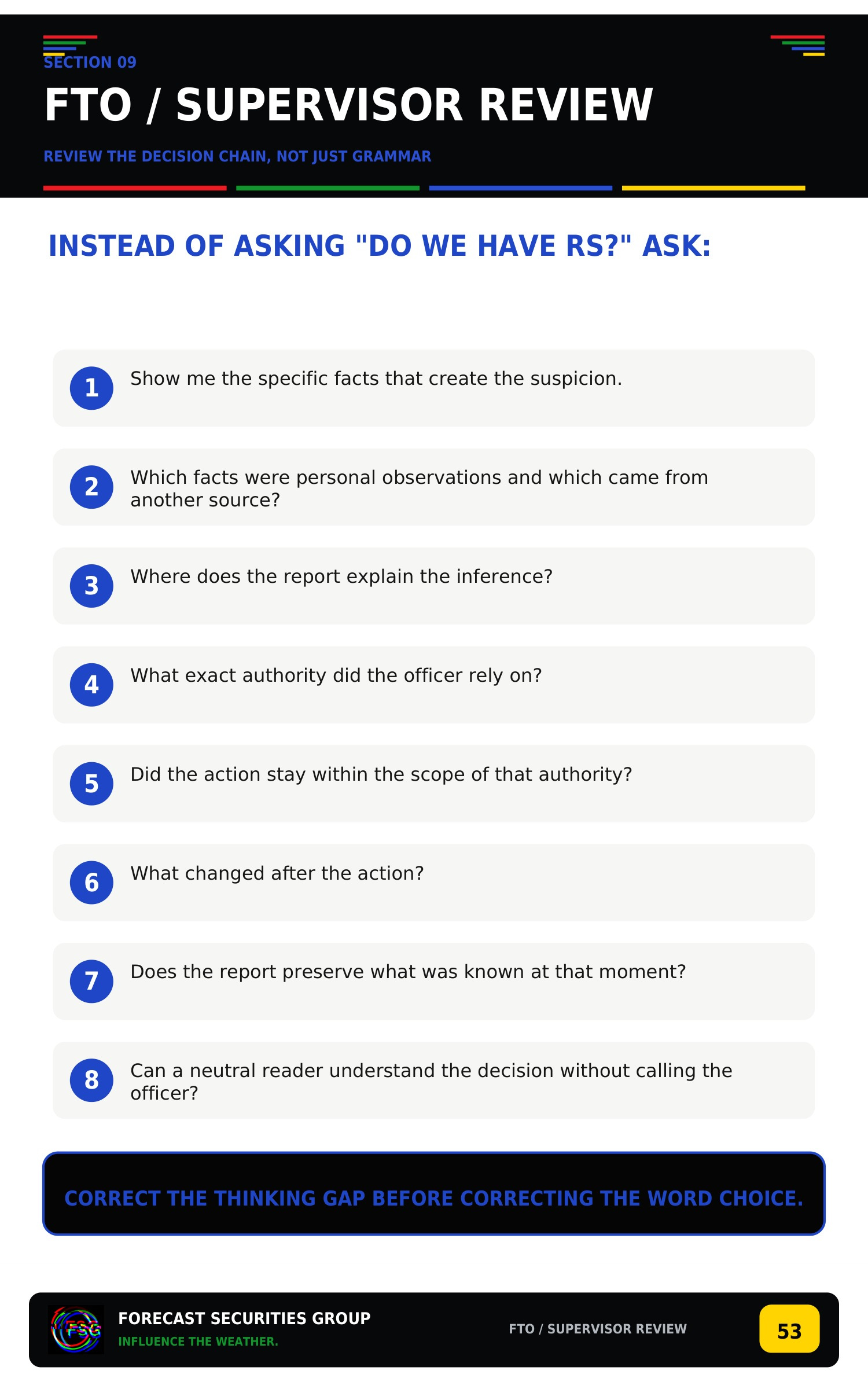 Image 2 of 4
 Image 3 of 4
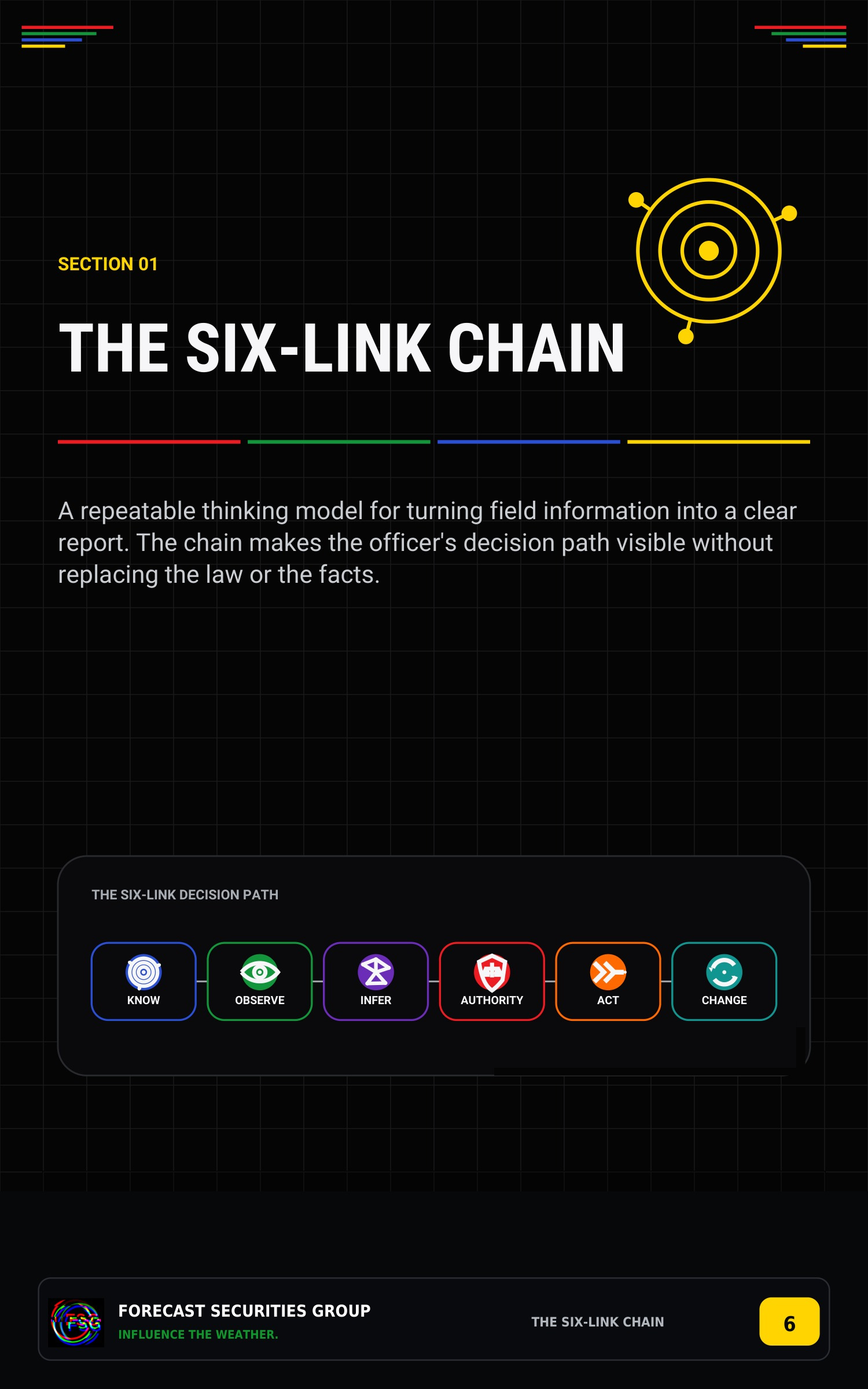 Image 4 of 4
Digital PDF · Instant download · Use on phone or tablet · Print in compact 5×8 format
The Articulation Builder is a structured workflow designed for the moment the report has to stand on its own.
Most reports do not fail because the facts are wrong. They fail because the decision path is invisible. A supervisor, prosecutor, or reviewing attorney cannot clearly see what the officer knew before the first police action, what was personally observed, what reasonable inference followed, what authority existed at that exact moment, why the action taken fit that authority, and what later changed. The Articulation Builder exists to close that gap.
It does not invent authority. It does not replace policy, training, or controlling law. It makes the officer’s actual decision path visible so a neutral reader can reconstruct the sequence without guessing.
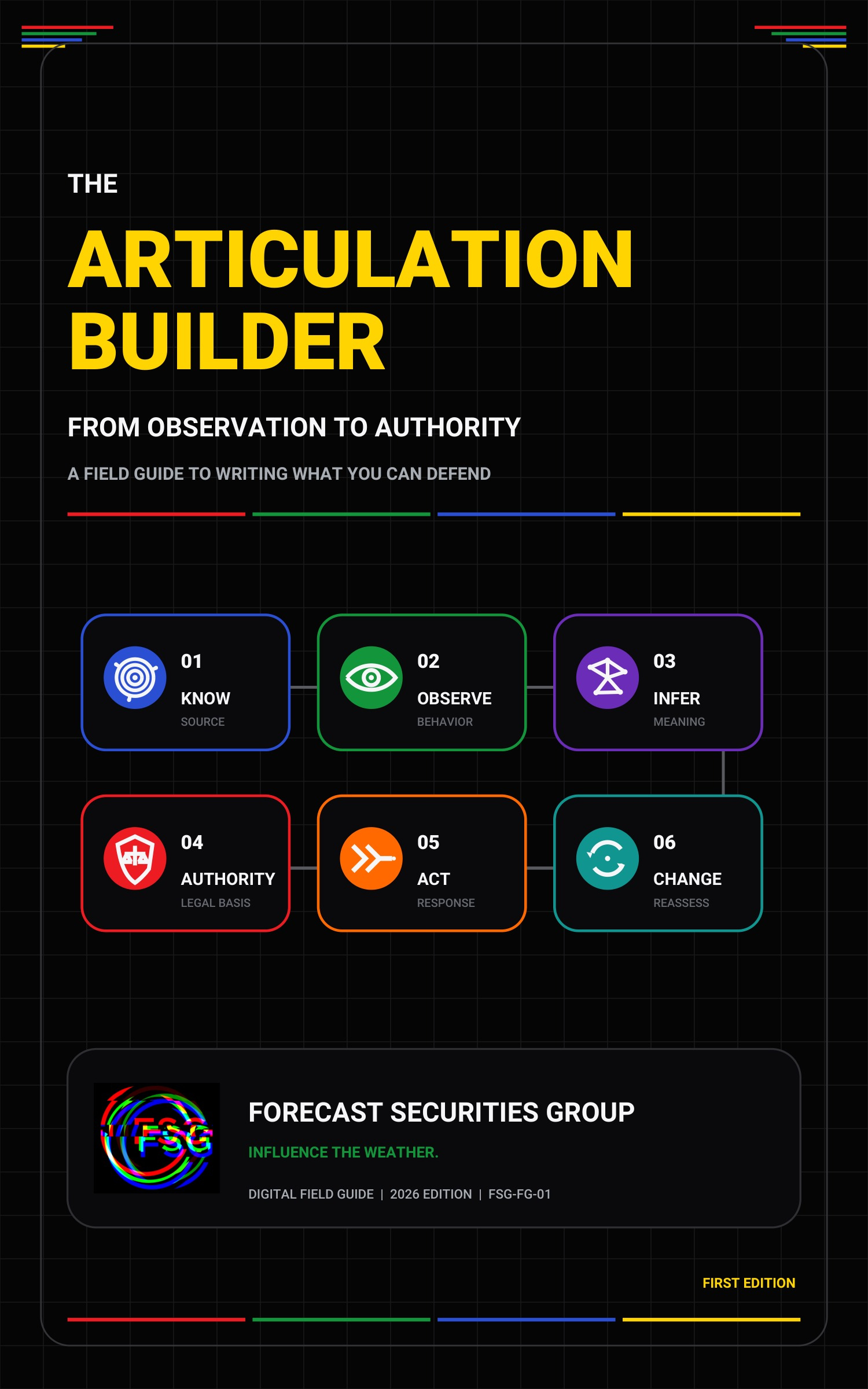
The core model is deliberate and practical:
Know — What information existed before the first police action? Dispatch details, witness or reporting-party statements, records checks, prior contacts, and environmental context are sourced and timed.
Observe — What did the officer actually see, hear, smell, feel, or verify in real time? Behavior is described before labels are applied.
Infer — What reasonable meaning did those facts and the surrounding context support at that moment?
Authority — What legal threshold did those facts create? Consensual contact, reasonable suspicion, frisk, probable cause, consent, warrant, or force authorization is identified clearly.
Act — What action was taken, and why did it fit the authority that existed then?
Change — What new fact altered the risk level, the available authority, or the need for continued control? Escalation, de-escalation, shift in legal basis, or resolution is documented in sequence.
The guide walks officers through the common failure points that weaken reports even when the underlying facts are solid: missing chronology, unsupported labels (“suspicious,” “furtive,” “for officer safety”), hindsight contamination, and training-and-experience language used as a substitute for facts. It provides a practical observation toolbox, a buzzword translator that forces labels back into observable behavior, and clear rules for preserving the order of knowledge.
A full Narrative Lab takes the model from concept to application. Side-by-side examples move from weak shorthand to stronger articulation across common call types—suspicious person, traffic stop and frisk, probation search, use of force, crisis/welfare, domestic violence, and shoplifting/theft. Each example is broken back down into the six-link decision path so the structure becomes visible.
Additional tools include field drills for label translation, source separation, timeline discipline, and change writing; a simple six-link coaching rubric for FTOs and supervisors; and a 30-second pre-submission test that asks the only questions that matter before the report leaves the officer’s hands.
Foundational case references and limited jurisdiction notes are included strictly as checkpoints. Current constitutional law, state law, local practice, and agency policy still control every decision and every report.
Format Instant digital PDF. Use it on a phone or tablet in the field, or print
***restricted to Law Enforcement and Private Security***
Digital PDF · Instant download · Use on phone or tablet · Print in compact 5×8 format
The Articulation Builder is a structured workflow designed for the moment the report has to stand on its own.
Most reports do not fail because the facts are wrong. They fail because the decision path is invisible. A supervisor, prosecutor, or reviewing attorney cannot clearly see what the officer knew before the first police action, what was personally observed, what reasonable inference followed, what authority existed at that exact moment, why the action taken fit that authority, and what later changed. The Articulation Builder exists to close that gap.
It does not invent authority. It does not replace policy, training, or controlling law. It makes the officer’s actual decision path visible so a neutral reader can reconstruct the sequence without guessing.
The core model is deliberate and practical:
Know — What information existed before the first police action? Dispatch details, witness or reporting-party statements, records checks, prior contacts, and environmental context are sourced and timed.
Observe — What did the officer actually see, hear, smell, feel, or verify in real time? Behavior is described before labels are applied.
Infer — What reasonable meaning did those facts and the surrounding context support at that moment?
Authority — What legal threshold did those facts create? Consensual contact, reasonable suspicion, frisk, probable cause, consent, warrant, or force authorization is identified clearly.
Act — What action was taken, and why did it fit the authority that existed then?
Change — What new fact altered the risk level, the available authority, or the need for continued control? Escalation, de-escalation, shift in legal basis, or resolution is documented in sequence.
The guide walks officers through the common failure points that weaken reports even when the underlying facts are solid: missing chronology, unsupported labels (“suspicious,” “furtive,” “for officer safety”), hindsight contamination, and training-and-experience language used as a substitute for facts. It provides a practical observation toolbox, a buzzword translator that forces labels back into observable behavior, and clear rules for preserving the order of knowledge.
A full Narrative Lab takes the model from concept to application. Side-by-side examples move from weak shorthand to stronger articulation across common call types—suspicious person, traffic stop and frisk, probation search, use of force, crisis/welfare, domestic violence, and shoplifting/theft. Each example is broken back down into the six-link decision path so the structure becomes visible.
Additional tools include field drills for label translation, source separation, timeline discipline, and change writing; a simple six-link coaching rubric for FTOs and supervisors; and a 30-second pre-submission test that asks the only questions that matter before the report leaves the officer’s hands.
Foundational case references and limited jurisdiction notes are included strictly as checkpoints. Current constitutional law, state law, local practice, and agency policy still control every decision and every report.
Format Instant digital PDF. Use it on a phone or tablet in the field, or print
***restricted to Law Enforcement and Private Security***